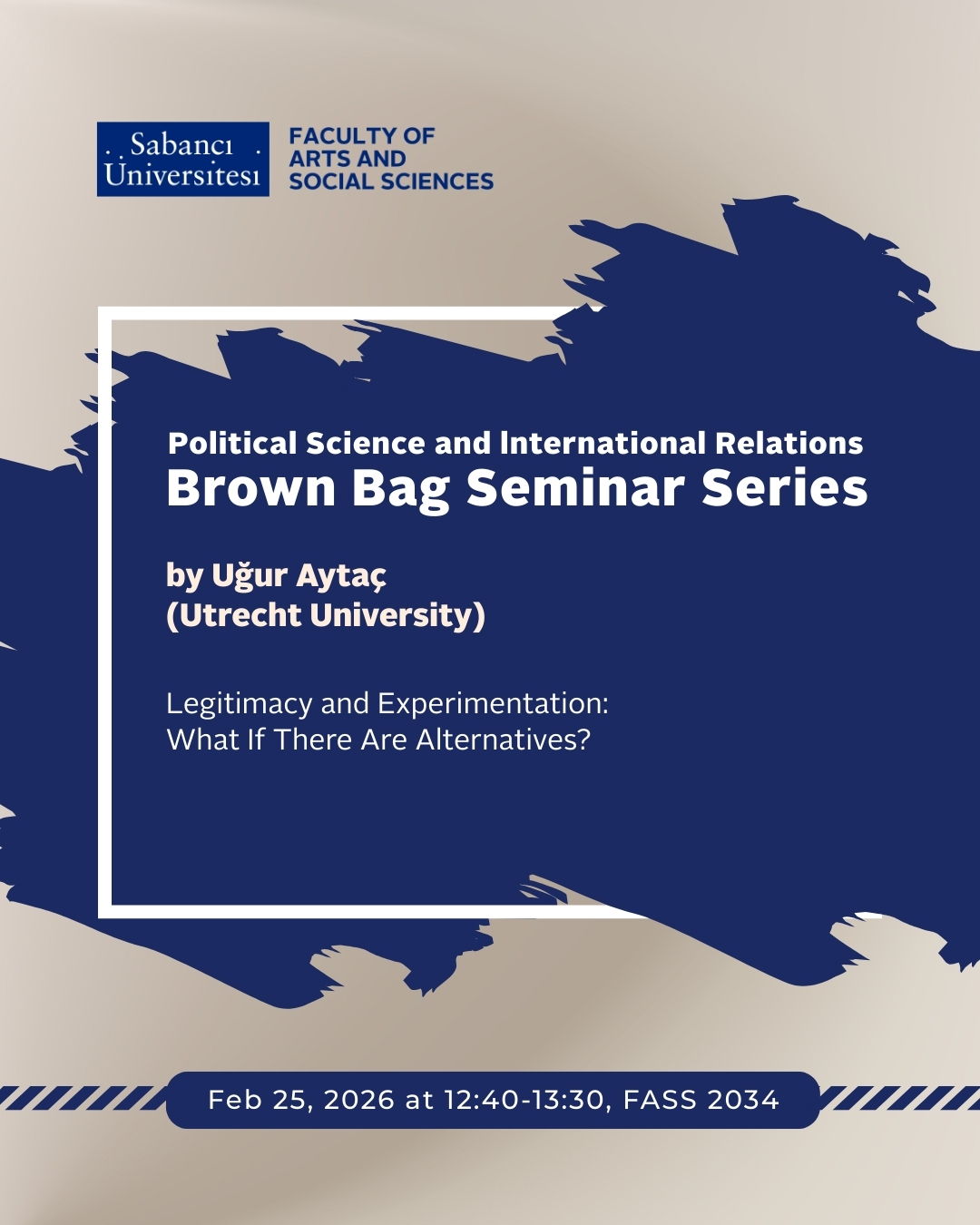
Abstract: Experimenting with different institutions affects how citizens should evaluate the legitimacy of a political order, as it enables them to compare the status quo with its alternatives. Revising Bernard Williams’ theory of legitimation, I argue that the accessibility of experimentation is a requirement of political legitimacy. This is because the presence or absence of experimentation itself reflects a political decision shaped by power relations. Consequently, when a state erects barriers to political experimentation not only through interference but also through the deprivation of resources, it blocks citizens’ access to the knowledge of alternative institutions that might undermine the justification of the status quo. I argue that a legitimate political order should institute an ecology of experimentation that is i) context-sensitive in determining what kind of experiments are required for political legitimacy, ii) grounded in the demands of opposition groups, and iii) oriented towards deep exploration with foundational power relations.
Bio: Uğur Aytaç is an Assistant Professor of Political Philosophy in the Department of Philosophy and Religious Studies at Utrecht University. His research focuses on democratic theory, political legitimacy, worker resistance, the digital public sphere, political realism, and ideology critique. His current project develops an experimental conception of political legitimacy, examining how experiments with institutions can help identify what a legitimate political order looks like. His work has been published in peer-reviewed journals including American Political Science Review, The Journal of Politics, Political Theory, Philosophy & Technology, and Political Studies. He is also the recipient of the 2025 Sakıp Sabancı International Research Award.